Parking Shortages Are a Property Capacity Problem
October 31, 2026
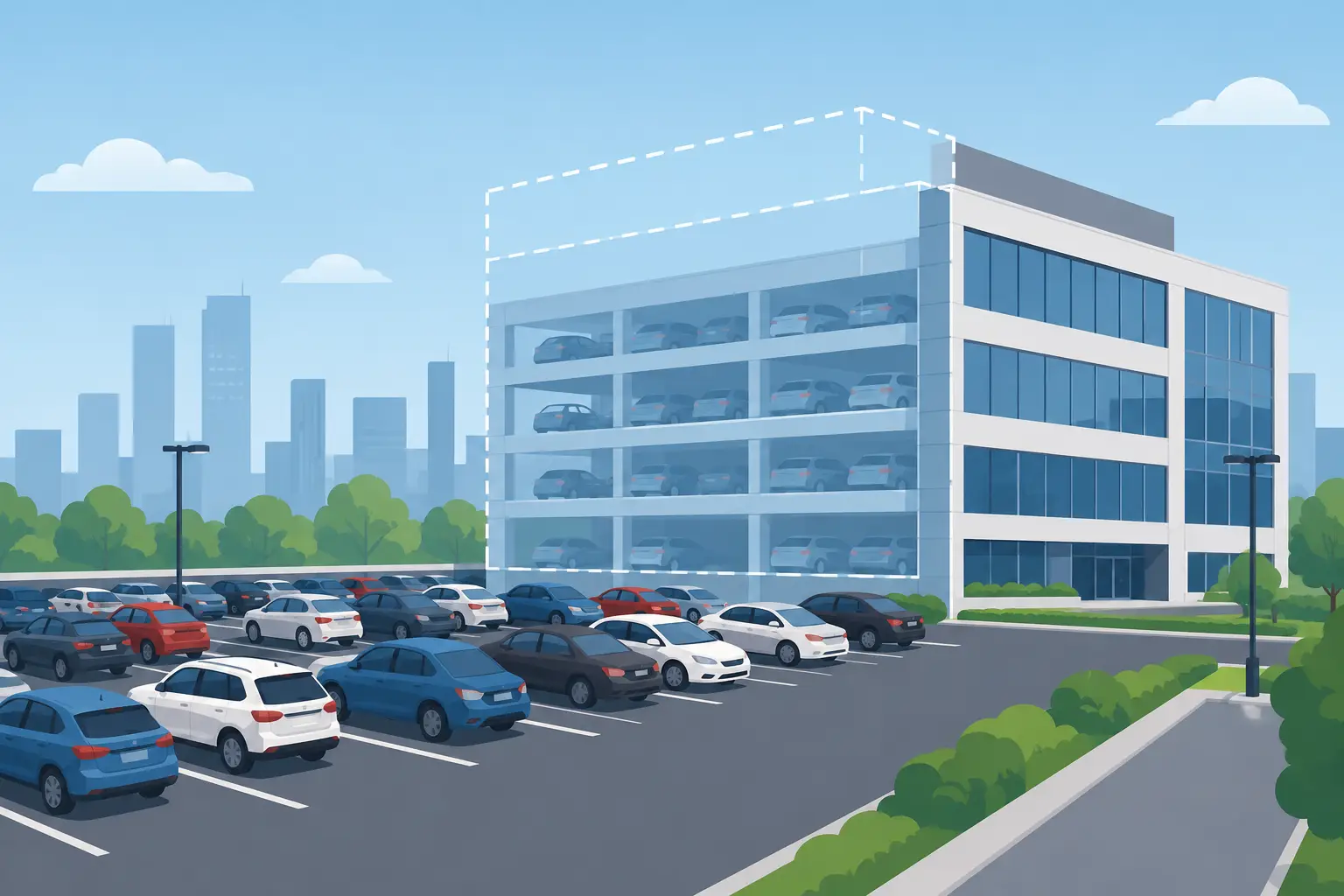
A driver reaches the edge of a metro area near the end of a legal shift, but every practical space is full, too tight for the equipment, or behind a gate with unclear access. That is what parking shortages look like on the ground. They are not simply an inconvenience for drivers. They are a capacity problem that affects freight schedules, property operations, local roads, and the businesses that depend on reliable truck movement.
For property owners, the issue also creates a practical question: does a portion of your paved yard, industrial ground, or underused acreage have the access and operating fit to serve commercial vehicles? The answer is sometimes yes, but only after an honest review of the site. Truck parking is physical. Entrance geometry, road approach, turning room, surface condition, drainage, lighting, and boundaries all matter.
Why parking shortages persist
Truck parking demand concentrates where freight actually moves: near interstates, industrial districts, ports, distribution centers, manufacturing corridors, and major metro areas. Available capacity, however, is often scattered, restricted, or poorly matched to the equipment that needs it. A lot may have open spaces but no room for a tractor-trailer to turn. A yard may be accessible during business hours but unusable for a driver arriving at 10 p.m. A location may accept tractors but not detached trailers.
Public rest areas and conventional truck stops carry much of the burden, especially along high-volume corridors. They also fill quickly. When drivers cannot find a suitable location, they may lose usable driving time searching, park farther from their route, or stop in places not designed for commercial vehicles. None of those outcomes improves safety or supply-chain reliability.
Fleet operations feel the same pressure differently. A dispatcher may need recurring overnight capacity near a customer, a terminal, or a route transition point. The need is not always for a large terminal. It may be five spaces for tractors, twelve trailer positions, or dependable weekend capacity. Small gaps in the market can create large operating problems when there is no verified place to put equipment.
The shortage is therefore less about a nationwide absence of empty ground and more about a shortage of usable, verified, truck-compatible capacity in the right places.
Parking shortages are not solved by any open lot
It is tempting to view unused land as instant parking inventory. That approach creates problems for everyone involved. A passenger-vehicle lot, a narrow rear yard, or a gravel area behind a building may not safely accommodate commercial equipment. Before discussing revenue or launching availability, the site has to work operationally.
Road approach comes first. Can a driver reach the property without a difficult turn, low clearance, weight restriction, or local route issue? The entrance needs enough width and geometry for the vehicle types being considered. Inside the property, drivers need room to turn, back, park, and exit without crossing into loading areas, tenant space, customer parking, or off-limits ground.
Surface condition matters just as much. Some sites are well suited for tractors and trailers because they have durable pavement, defined circulation, and stable all-weather access. Others may work only seasonally, only for certain equipment, or not at all without improvements. Gravel can be workable in the right setting, but drainage, rutting, dust, snow management, and the expected vehicle weight must be considered directly.
Then there are operating boundaries. A property owner may want trucks limited to a designated row, a specific entrance, or defined hours. There may be tenant traffic during the day, active loading operations, security procedures, or areas that must remain completely clear. These are not minor details. Clear boundaries are what keep added parking from interfering with the business already operating on the site.
The right question is capacity, not acreage
A property can have substantial acreage and still offer little usable truck capacity. Conversely, a smaller paved section with a clean approach and efficient layout may accommodate meaningful demand. The useful measure is not the size printed on a parcel record. It is the number and type of commercial vehicles the property can receive safely and reliably.
That is why a proper review looks at equipment mix. Parking for a box truck is different from parking for a tractor. A detached 53-foot trailer needs different space than a tractor-trailer combination. Recurring fleet parking may require predictable placement and access rules that are unnecessary for a single overnight stay.
What property owners can control
Property owners do not need to become full-time parking operators to make excess capacity available. The practical goal is to establish a clear operating fit: where vehicles enter, where they park, what equipment is allowed, when access is permitted, and what areas remain off limits.
A useful site review starts with simple facts. A map should show the entrance, circulation path, parking area, building footprint, neighboring uses, and restricted zones. Current photos should show the road approach, gate or driveway, parking surface, turns, and any obstacles that would matter to a commercial driver. These basics often reveal whether a location deserves a closer look.
From there, terms can reflect the property owner’s priorities. Some owners want daily or overnight stays. Others prefer monthly arrangements that create predictable use. A business with intermittent yard demand may only want to offer capacity on certain days or in a particular season. There is no reason to force every property into the same model.
The same is true for pricing. A location near a dense freight market with constrained capacity may support different rates than a rural site with lower demand. Access quality, equipment compatibility, security features, surface, duration, and local alternatives all influence the commercial value of a space. The best arrangement is one that makes sense after the site and demand are both understood.
Add a channel without giving up control
One concern property owners raise is whether making space available means replacing their current customers, leasing structure, or listing relationships. It should not. Truck parking can be an additional revenue channel, not an all-or-nothing platform decision.
That distinction matters. An owner may already have direct fleet relationships, tenant arrangements, or another way of marketing available space. Any new channel should respect those relationships and focus on incremental capacity that would otherwise sit unused. The owner retains control over the property, the permitted area, the operating rules, and the conditions under which parking is offered.
Benchmark Truck Parking uses this owner-first approach by reviewing the physical site, confirming terms, and matching capacity to driver requests or fleet discussions. The point is not to advertise vague availability. It is to confirm the exact location, equipment fit, price, dates, and access instructions before payment and launch.
That level of confirmation protects drivers from arriving at a site that does not work for their truck. It also protects property owners from unexpected vehicle types, unclear boundaries, and informal assumptions about access.
Better capacity starts with better information
Drivers and dispatchers do not need another pin on a map that might be inaccessible, full, or unsuitable for their equipment. They need location-specific information. Is the site compatible with a tractor-trailer? Is it available for the requested dates? Can the driver enter after hours? Is the unit parking as a tractor, trailer, or combined vehicle? What instructions apply at the gate?
For owners, better information means fewer surprises. A clear request process can identify stay length, equipment type, arrival timing, and recurring needs before a vehicle is sent to the property. That makes it easier to accept business that fits and decline business that does not.
There is a trade-off. More controlled access and more detailed verification can require a little more setup than simply opening a gate. But the alternative is uncontrolled use of a commercial property, which can create conflict, congestion, and preventable risk. A defined process is usually the lower-friction path over time.
Where new capacity can make a difference
The most useful new parking capacity is often close to freight activity but outside the most constrained truck-stop footprint. Industrial properties near highways, distribution clusters, rail-adjacent uses, manufacturing areas, and growing warehouse markets can be strong candidates when truck movement already fits the surrounding area.
In states with active freight corridors such as Illinois, Indiana, Texas, Georgia, and Florida, demand can vary sharply by market and route. A site does not need to be next to a major terminal to have value. It does need to be reachable, usable, and clearly operated.
Parking shortages will not disappear because someone labels empty ground as available. They ease when suitable properties add capacity with realistic rules, verified access, and enough operating discipline to make the space dependable. For owners with the right site, that can turn idle ground into revenue without turning the property into a different business.
More articles · Truck parking locations · List your property