Tractor Trailer Parking That Works for Your Site
October 14, 2026
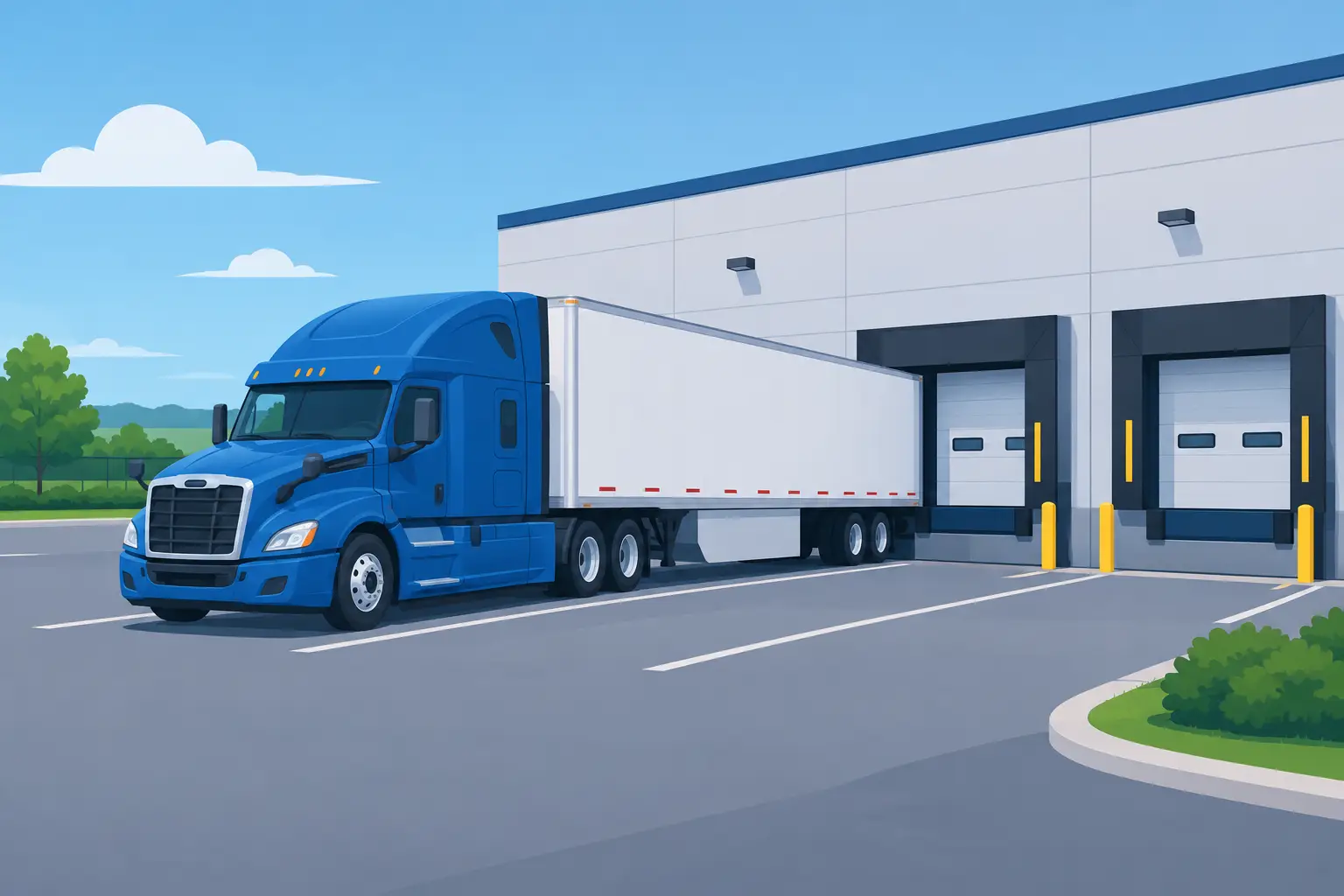
A vacant corner of a paved yard can look like unused ground. To a driver nearing the end of available hours or a dispatcher trying to stage equipment for tomorrow's load, it can be needed capacity. Tractor trailer parking connects those two realities, but only when the property can handle commercial vehicles safely and the operating rules are clear from the start.
For property owners, the question is not simply whether a truck can fit. The better question is whether trucks can enter, turn, park, and leave without disrupting the core business, damaging the site, or creating uncertainty for the people already using the property. A good parking arrangement puts idle ground to work while keeping the owner's boundaries intact.
What Makes Tractor Trailer Parking Viable
A site does not need to be a full-service truck stop to serve commercial parking demand. It does need practical access and a layout that matches the equipment expected to use it. A few spaces for tractors or trailers may be useful. A larger paved yard with room for combined units may support recurring fleet capacity. The right model depends on the property, the local market, and how much of the site is genuinely available.
Road approach is the first filter. A truck may technically reach a property but still face a tight turn, a low clearance, weight restrictions, residential streets, or an entrance that creates conflict with other traffic. If the approach is difficult, drivers may arrive late, miss a turn, block a driveway, or abandon the attempt. That creates an operating problem before they ever reach a parking space.
Entrance geometry matters just as much. Tractor-trailer combinations need room to swing wide and straighten out. Gates, curbs, signage, drainage features, parked cars, and landscaping can reduce usable access quickly. The same applies inside the site. A property can have substantial acreage but only limited truck-usable capacity if equipment cannot maneuver between rows or back into designated spaces.
Surface condition also deserves a direct assessment. Pavement, compacted gravel, stabilized ground, and well-maintained industrial yard surfaces may all work in the right setting. Soft ground, deep ruts, poor drainage, or areas that deteriorate under axle weight do not. A property owner should not promise capacity that the surface cannot support through changing weather and repeated use.
The Capacity Number Should Be Real
Parking capacity is not a rough count based on how many vehicles might fit in an open field. It is the number of units that can safely use the site while preserving turning room, access lanes, loading areas, fire lanes, tenant circulation, and off-limits areas.
This is where a marked site map and current photos are useful. They turn a broad conversation into a real site decision. Show the entrance, truck route, proposed parking area, gates, lighting, nearby buildings, and any areas that must remain clear. Six useful photos usually answer more than a long description: road approach, entrance, main drive, parking surface, turning area, and the boundary of the usable space.
Set the Operating Boundaries Before Trucks Arrive
The strongest truck parking sites are not necessarily the largest. They are the sites with rules that fit the owner's operation and are communicated before a booking is confirmed.
Start with the equipment you will accept. A tractor without a trailer has different space and maneuvering needs than a 53-foot trailer or a complete tractor-trailer combination. Box trucks, straight trucks, chassis, empty trailers, and loaded trailers can each create different considerations. If only certain equipment fits, say so plainly.
Then define when vehicles may enter and leave. Some industrial properties can support 24-hour access. Others need arrivals outside tenant business hours, scheduled gate access, or restricted movement during loading activity. There is no universal right answer. The goal is an operating plan that prevents a parked unit from interfering with the property’s primary use.
Off-limits areas should be explicit, not assumed. That may include dock doors, customer parking, employee access, loading lanes, dumpster pads, storage areas, emergency routes, or land reserved for a tenant. Clear boundaries protect the site and reduce driver confusion. Lighting, cameras, fencing, gate procedures, and restroom availability should also be described accurately. Do not imply services the property does not provide.
Property owners should also decide whether the site is intended for daily stays, monthly parking, recurring fleet use, or a mix. Daily demand can create flexibility and fill unused capacity, but it may involve more frequent arrivals and departures. Monthly and recurring arrangements can make occupancy more predictable, especially for fleets staging equipment on regular lanes. The trade-off is that committed spaces may not be available for other uses when demand shifts.
Match Parking to How Drivers and Fleets Actually Operate
Drivers do not need vague promises of “truck parking nearby.” They need to know whether their specific vehicle can enter the location, whether the site is available for the requested dates, and how access works after confirmation. Exact location, pricing, approved equipment type, arrival instructions, and site rules should be settled before payment and launch.
That request-based approach is especially useful when a property has constraints that do not fit a generic listing. A driver with a tractor and 53-foot trailer may need a different space than an owner-operator dropping an empty trailer for two nights. A fleet may need ten spaces every weekday, or it may need overflow capacity only during a seasonal peak. The property does not have to accept every request to become a valuable parking option.
For fleet managers, reliability often matters more than the lowest posted rate. A route-aligned site with dependable access may reduce empty miles, protect driver time, and prevent equipment from being staged in an unsuitable location. But fleets need capacity that matches their schedules. If trailers arrive overnight and tractors retrieve them at 5 a.m., the site rules must support that pattern. If the property cannot accommodate it, clarity is better than a difficult launch.
Build Revenue Without Replacing What Already Works
Owners with existing customers, direct parking arrangements, or third-party listings do not need an all-or-nothing platform decision. Excess capacity can be offered as an additional nonexclusive revenue channel while the owner keeps the relationships and sales methods already in place.
That distinction matters. A yard operator may have a few long-term customers and still have spaces available on certain days. An industrial property may use part of its lot for its own equipment but have a separate area available for commercial parking. A landowner may have seasonal demand that leaves usable space idle for part of the year. Each situation can support incremental income if the capacity is identified honestly and managed within defined limits.
Benchmark Truck Parking evaluates the practical conditions before moving forward: access, maneuverability, usable space, restrictions, local demand, and the boundaries that protect the property’s primary operation. Once site terms are confirmed, owners retain 75% of Benchmark-collected revenue, with 25% retained for the marketplace and operating work. Daily or monthly payout timing can be aligned with the arrangement.
The point is not to force a property into a parking business it was never built to run. It is to identify whether part of the site is operationally suitable, then create a controlled way to use that capacity.
A Simple Site Review Process
The most efficient way to evaluate a property is to begin with the facts. Share the property address or general location, the approximate available area, the types of commercial vehicles the site may accommodate, and any access restrictions. Mark the intended truck route and parking area on a map, then provide current photos that show conditions as they are.
From there, review the details that determine whether the site can launch: approach roads, entrance width, turning movements, surface condition, lighting, gate procedures, drainage, neighboring uses, and areas that must remain off limits. Local demand matters too. A well-laid-out yard in a freight-active corridor may have a stronger fit than a larger property far from usable truck routes.
Do not overstate capacity to make a site appear more attractive. A smaller site with dependable access and clearly defined spaces is more valuable than a large site that creates confusion on arrival. The goal is a parking operation that drivers can use correctly and owners can live with over time.
If your property has idle ground, start by looking at the truck’s path, not just the open space. A clear route in, a workable place to park, and a clear route out are the foundation for parking revenue that respects the site.
More articles · Truck parking locations · List your property