What Vacant Parcel Results Look Like for Owners
October 22, 2026
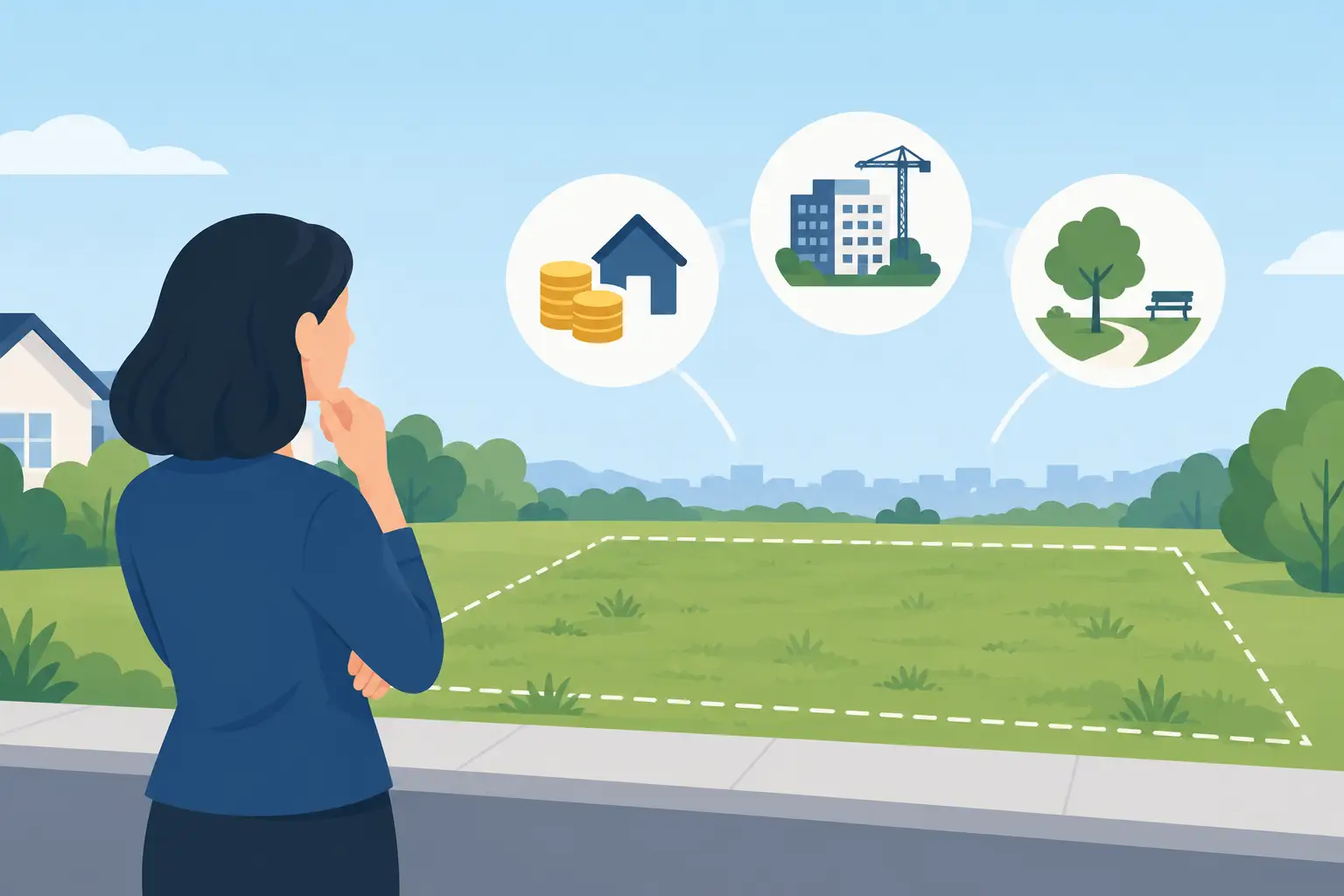
A vacant parcel can look valuable on paper and still be a poor fit for commercial truck parking. Vacant parcel results come from the operating details: whether a tractor-trailer can reach the entrance, turn without conflict, park on usable ground, and leave without creating problems for the property or its neighbors. Acreage matters, but access and boundaries usually decide the outcome.
For owners with idle industrial land, excess yard space, or underused paved ground, truck parking can create incremental revenue without taking on a full development project. The workable sites are not always the largest ones. They are the ones with a clear operating fit, a realistic local need, and terms that protect the owner's existing business.
Vacant Parcel Results Start With Operational Fit
Truck parking is a physical use, not a map pin. A site needs enough room for the equipment it intends to serve, but it also needs a route that works from the public road to the assigned spaces. An available five-acre parcel with a tight entrance, low clearance, or an awkward turn may have less practical capacity than a smaller yard with a wide gate and a clean circulation pattern.
Road approach and entrance geometry
The first question is simple: can the vehicle get there safely? Drivers need a road approach that supports commercial traffic and an entrance that accommodates the turning path of the equipment. A box truck may fit through an opening that creates trouble for a 53-foot trailer. A tractor may enter easily while a tractor-trailer combination needs additional swing room.
This is why site review should consider the full trip, not just the parking area. Nearby intersections, gate position, driveway width, curb cuts, overhead lines, internal turns, and exit routing all affect whether a space can be offered reliably. A property does not need perfect geometry, but it does need a defined vehicle fit.
Usable space is different from total acreage
Owners sometimes begin with a total parcel size and estimate capacity from there. That can overstate what is actually available. Setbacks, drainage areas, buildings, stored materials, employee parking, loading activity, soft ground, and access lanes all reduce the area that can be assigned to truck parking.
The better question is how many vehicles can park while preserving safe movement and the owner's normal operations. A site may be suitable for a limited number of monthly trailer spaces but not for daily tractor-trailer parking. Another may work well for tractors arriving late at night but not for trailers that need wide, repeated turns. Clear limits are not a weakness. They make the capacity more dependable.
Surface, lighting, and boundaries
Pavement is useful, but a site does not need to look like a new truck stop to have value. The surface must be stable enough for the intended vehicles and conditions. Gravel, compacted ground, and mixed-surface yards can work when access is appropriate and the operating plan matches the site. Weak ground, poor drainage, or areas that become unusable in wet weather should be identified before spaces are offered.
Lighting, fencing, gate procedures, and off-limits areas also shape the result. Some owners want only a designated back lot used. Others need drivers to stay clear of loading docks, tenant areas, equipment storage, or employee entrances. Those boundaries should be stated plainly. Truck parking works best when the driver knows exactly where to go, where to park, and what not to use.
What Good Vacant Parcel Results Actually Mean
Good results are not limited to a headline revenue number. For a property owner, a productive parking arrangement should add income without creating daily confusion, interfering with current customers, or forcing an all-or-nothing commitment to one channel.
That means the right result may be a small number of recurring spaces used by a nearby fleet. It may be daily parking that fills available capacity around a business's own schedule. It may be trailer storage in an area that would otherwise sit empty. The strongest fit depends on the property, the local market, and how much operational activity the owner wants on site.
Revenue also needs to be measured against the space being committed. If a parcel is likely to be sold, developed, expanded, or repurposed soon, a flexible arrangement may be more valuable than pursuing maximum occupancy. If the property has existing direct customers or listings through other platforms, keeping those relationships intact matters. A nonexclusive parking channel can add demand without requiring the owner to give up the business already coming in.
Benchmark Truck Parking uses this approach: evaluate the site, confirm the operating terms, and add a channel rather than asking an owner to replace every existing one. Owners retain 75% of Benchmark-collected revenue, with payouts on a daily or monthly schedule. The arrangement only makes sense when the space, access, and boundaries can support it.
Review the Site Before Pricing the Spaces
Pricing should follow site review, not lead it. A number that looks attractive can create unnecessary friction if it assumes the wrong equipment type, parking duration, or level of access. Before setting availability, owners should work through four practical decisions:
- Define the usable parking area. Mark the space on a map and separate it from areas needed for business operations, storage, tenant access, or future work.
- Confirm the vehicle types. Decide whether the site can handle tractors, trailers, tractor-trailer combinations, box trucks, or a narrower mix of equipment.
- Document the access conditions. Photos of the road approach, entrance, turns, surface, lighting, and designated parking area allow a real site decision instead of a guess.
- Set the operating rules. Establish gate access, hours, parking locations, off-limits areas, communication expectations, and any restrictions required by the property or local rules.
This review is not paperwork for its own sake. It prevents a mismatch between what drivers expect and what the property can safely provide. One map, a few clear photos, and honest answers about site conditions can reveal more than a broad acreage figure.
Local Demand Changes the Value of the Same Parcel
Two comparable parcels can produce very different outcomes because demand is location-specific. A yard near industrial activity, freight routes, distribution centers, manufacturing, ports, or dense warehouse corridors may have regular demand for short stays, monthly parking, or trailer capacity. A parcel farther from commercial traffic may still work, but it may require a more specific use case or a recurring fleet relationship.
In markets across Illinois, Indiana, Wisconsin, Iowa, Kentucky, Texas, New York, Georgia, and Florida, truck parking demand is shaped by more than highway proximity. Dispatch patterns, delivery appointments, local truck restrictions, seasonal freight, and nearby industrial uses all matter. The useful question is not whether trucks pass nearby. It is whether drivers and fleets need a location that matches the site's equipment fit and access conditions.
For drivers, a confirmed location with correct access instructions is more useful than a vague listing. For fleet managers, recurring capacity has value when it aligns with route timing and equipment needs. That is why request-based confirmation can be a better operating model than promising every site to every vehicle at every hour.
Protect the Property While Adding Capacity
A parking plan should support the owner's control of the site. That starts with assigned areas and clear instructions, but it also includes the freedom to adjust capacity if the property changes. A business may need more of its own yard during a busy season. Construction, tenant needs, or a sale process may change what is available. Flexible, nonexclusive arrangements make those changes easier to manage.
It is also reasonable to start with limited capacity. Launching a defined section of a parcel lets an owner see how traffic, access, and demand perform before dedicating additional space. If the experience is orderly and the demand supports it, capacity can be reconsidered. If it is not the right fit, the owner has learned that without building a new operation around an uncertain assumption.
The best next step is not to promise a number of spaces from a satellite image. Walk the route, mark the usable ground, identify the boundaries, and evaluate the site for the trucks it can actually serve. That is how an idle parcel becomes a practical source of revenue instead of another operational problem.
More articles · Truck parking locations · List your property